Monday, April 14, 2014

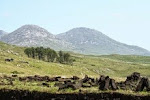
Best Place to GoWild in Ireland is Connemara

The Irish Times are running a competition to find out the Best Place to #GoWild in #Ireland. The link to add your nomination is www.irishtimes.com/gowild 

I put in a pitch for #connemara and have been tweeting some ways to #gowild or why #connemara is #wild since Saturday as inspiration for nominations! 
Here's some suggestions in no particular order....with more to follow over the next week or so! 


  1. #GoWild #connemara Wild craic this wkend @clifdencce #tradfest
  2. #GoWild #Connemara @OldSmoky smoked wild salmon honey tuna & mackerel will be found at many restaurants during @Galwayfood
  3. #GoWild #connemara @connemaramussel takes place May bank holiday on the #WildAtlanticWay
  4. #GoWild #connemara @Leenanewalk takes place May bank hol conquer the #wild mountains or walk along killary fjord
  5. #GoWild #connemara Feile Joe hEinniu Ceol & #wild craic takes place May bank holiday in Carna on the #WildAtlanticWay
  6. #GoWild #connemara @BallynahinchCas wild garlic or mushrooms in the woods catch wild salmon & some wild characters called it home
  7. #GoWild #connemara @ConnemaraLinks swing too hard & your ball might end up in the bog or in the #WildAtlanticWay
  8. #GoWild #connemara @Killarygroup #GoWild with numerous water or land activities btw turf challenge doesn't mean a day on the bog!
  9. .#GoWild #Connemara hire a bike from @All_Connemara explore bog road sky road or beach roads
  10. #GoWild #connemara #WildAtlanticWay oscar Wilde stayed with Gogarty @renvylehse he described #Connemara as a 'savage beauty'
  11. GoWild #connemara @RealConnemara will take you coasteering surfing kayaking & more #wildwater #WildAtlanticWay
  12. #gowild #Connemara Eco camping @actonsbeach open spaces, sandy beaches, campfires & acres of flora & fauna on #WildAtlanticWay
  13. #GoWild #connemara in wild Inagh Valley between 12 bens & maamturks @InaghLodge great base for wild salmon fishing or mountain hikes
  14. #GoWild #Connemara Victorian Walled Garden @KylemoreTourism shows how determined gardeners attempt to tame wild rugged landscape
  15. #gowild #Connemara @connomara likes the outdoors in #connemara & has the t-shirts to prove it! You'll find them Faoin Tuath in Clifden
  16. #GoWild #Connemara inspiring filmmakers @TristanHeanue poster 'In This Place' shot in Connemara last summer. " pic.twitter.com/QxogdTBZNn
  17. #GoWild #connemara cruise the fiord with @Killarycruises you may even see dolphins
  18. #GoWild #Connemara @Connemara_Lamb grazes on wild flowers & heathers giving it unique flavour & taste & EU status pic.twitter.com/r0EDtYGk1P
  19. #GoWild #connemara Galway's coastline 689 km long & most of this is in Connemara & part of 1500km Wild Atlantic Way.
  20. #GoWild #connemara @renvyleweather tracking the #weather helps for all those #outdoor #activities
  21. #gowild #connemara @tourdeconamara 140km or 80km routes through some of finest coastal and mountainous landscape in Ireland. May 24th
  22. #gowild #connemara pick up a picnic from @WalshsBakery & enjoy lunch in the great outdoors
  23. #GoWild #connemara who'd have thought to combine maths & outdoor activities for students? @project_maths did
  24. #GoWild #connemara inspired by colours of #connemara @ConnemaraBlue Contemporary Fused Glass, Handmade in Connemara
  25. #GoWild #connemara wild Connemara Rowan berry jam made by Brigid Sealy
  26. #GoWild #Connemara @HehirsofClifden provide Fisherman Out of Ireland, Jack Murphy, Weird Fish & Target Dry... attire for the outdoors
  27. #gowild #connemara @Cliodhnaof takes to the outdoors teaching her kids about where food comes from ( lessons there for adults too)
  28. #gowild #connemara @connemarasafari takes you Island hopping off the Connemara coast
  29. #gowild #connemara perched on the coast @ODowdsSeafood offers seafood specials & seaviews #WildAtlanticWay
  30. #GoWild #connemara @CEEscapes equestrian breaks with a cultural twist in Connemara
  31. #GoWild #connemara discover what lies beneath ocean waves #WildAtlanticWay with @scubadivewest
  32. #gowild #connemara The Connemara Pony adapted to the wild landscape. Celebrated at the Clifden show every August pic.twitter.com/gyCLKk7W0C
  33. #gowild #connemara Pony Treks across beaches or mountains at Cleggan, Ballyconeelly, Errislanann, Letterfrack, Oughterard or Moycullen
  34. #gowild #connemara @DeborahWatkins5 Brings the colours of the landscape alive through her paintings & writing!
  35. #gowild #connemara Sandy beaches right around the coast An Trá Mór Coill Rua, Trá an Dóilín Renvyle Beach, Dog's Bay, Aillebrack etc
  36. #gowild #connemara Writers have been inspired by #connemara @ClifdenBookshop stocks local authors, books about the area & more
  37. #gowild #connemara Writers have been inspired by #connemara @ClifdenBookshop stocks local authors, books about the area & more
  38. #gowild #connemara Fancy some wild camping? with @wildfullstop there's no limit to the wild adventures you can have in the mountains
  39. #gowild #connemara you don't just find a place to stay with @connemaralets they've got ideas for free things to do on their website too
  40. #gowild #connemara Good to know @ClifdenRNLI is there helping to save lives & ready to go to the rescue along the #wildatlanticway
  41. #gowild #connemara Good to know @ClifdenRNLI is there helping to save lives & ready to go to the rescue along the #wildatlanticway
  42. .#gowild #connemara You'll be wild about @Connemara_food in Oughterard after you taste their air dried lamb or beef or other products
  43. #gowild #connemara Wild West Cowboy John Wayne was a 'Quiet Man' in #Connemara Oughterard,Cong & Lettergesh are all on the film trail
  44. #gowild #connemara Where else can a Galway Hooker or a Brazen Hussey take you on the trip of a lifetime?
  45. #gowild #connemara A parrot called Gilbert to greet you- the password is cheers & the piano man sings til late v. late @AbbeyglenCastle

Thursday, January 30, 2014

Lá Fhéile Bríde -St Brigid's Day


St Brigids  Cross in the Rafters of Dan O' Hara's Cottage
  
St Brigid's Blessing by the Brigidine Sisters 
May Brigid bless the house wherein you dwell
Bless every fireside every wall and door
Bless every heart that beats beneath its roof
Bless every hand that toils to bring it joy
Bless every foot that walks its portals through
May Brigid bless the house that shelters you.

In Irish February is called Feabhra -it is also known as Mí na Gaoithe -the month of the wind or Mí na Féile Bríde -the Month of St Brigid's Festival. Apart from St Patrick no other Saint has more prominence that St Brigid. There are churches,convents and holy wells that are called after her. From the beginning she was associated with Kildare where she founded a convent. The pre-christian  festival of Imbolg and the goddess Brigit was adapted to become St Brgid's Day.

The festival of Imbolc marks the beginning of the farming year when the days started to get longer and warmer.'' Imbolc or "oi-melg" means "ewe's-milk" which is indicative of the lambing season, when the sheep are born, and is also the traditonal beginning of spring. It is then obvious that celebrations of animal fertility, of the flocks and herds as well as of humans would take place at this time. Milk was associated with this celebration and time of year as well. Originally ewe's milk was the milk of choice, but as cows replaced sheep as the primary domestic herd animal, cow's milk became the more significant.'' St Brigid's is associated with cattle and dairy workers. On the feast of St Brigid 'turning the sod' was an important ritual. Many farmers turned a sod or two in the tillage field and prayers were said.  An old saying said
'Gach 're lá go maith
 O'm lá amach
Agus leath mo lae féinigh'
(Every 2nd day fine from my day onwards and half of my own day)

As the shamrock is associated with St Patrick the symbol most associated with Brigid is St Brigid's Cross (Cros Bríde) Made from rushes or straw the lozenge shaped one were the most common but here are some some samples from E.Estyn Evans books showing similiar types of 'crosses' from other parts of Europe.


The Brigid's Cross was used as a symbol to invoke the protection of the household and farm animals and
to ensure abundance of general prosperity. It was believe that no evil could pass the charm which was hung over the door and the barn. In Co.Galway  the St Brigid's Cross was hung up up in the rafters of the house. According to tradition the rushes should be pulled not cut on St Brigid's Eve and the cross then fashioned from left to right in accordance with the sun.  There are many stories associated with St Brigid and the reason behind the making of the cross and other rituals associated with the day.

On the feast day it was believed the saint wandered the countryside on the eve of her feast day and bread was left on the doorsteps for her and sometimes a bed of rushes or straw was left beside the fire  In other places ribbon or a piece of cloth was left outside and was 'touched by Brigid' and then had curative powers.


Another tradition which has largely disappeared is the 'Brideog'
'' This was another symbol of St. Brigid, an effigy, also fashioned from straw, but dressed up as a doll might be. In later times, where the tradition survived, a doll was used. Whilst some communities were careful to make their Brideogs look attractive, others deliberately veered towards the grotesque. At the height of its popularity as a custom, the Brideog was carried from house to house by unmarried young women only, who presented the head of each household with a specially made St. Brigid's cross. Olive states that in her own county an unmarried maiden dressed up in white, and instead of carrying an effigy, represented the saint herself.'' Olive Sharkey covers many of these traditions in her book Old Days Old Ways.


Monday, January 6, 2014

Little Christmas -The Epiphany or Women's Christmas -Traditions of the 12th Day of Christmas!

In the words of my niece my New Year's  'revolution' is to start to being more active on this blog which has been sadly neglected for the past year.

 Nollag Beag (Little Christmas) or Nollag na mBan(Women's Christmas) The Epiphany or Feast of the Three Kings. In Ireland there are many traditions associated with it.  In the West of Ireland the eve of Little Christmas the tradition was to light Twelve Candle and this was something we did growing up and carry on the tradition today minus the cow dung!  Each candle represented a family member and it meant that family would die off according to how the candles burnt out. Here is a description from Sacred Texts about  Christmas in Ritual in Europe which is very interesting.


Here is the description of this tradition from that text. ''As for the fires, an Irish custom to some extent supplies a parallel. On Epiphany Eve a sieve of oats was set up, “and in it a dozen of candles set round, and in the centre one larger, all lighted.” This was said to be in memory of the Saviour and His apostles, lights of the world.  Here is an account of a similar custom practised in Co. Leitrim:—
“A piece of board is covered with cow-dung, and twelve rush lights are stuck therein. These are sprinkled with ash at the top, to make them light easily, and then set alight, each being named by some one present, and as each dies so will the life of its owner. A ball is then made of the dung, and it is placed over the door of the cow house for an increase of cattle. Sometimes mud is used, and the ball placed over the door of the dwelling-house.” 

The poem Coinnle ar Lasadh /Le Máirtín Ó Direáin describes twelve candle lighting in houses on an Island on the West. 

In oileán beag i gcéin san Iarthar
Beidh coinnle ar lasadh anocht,
I dtíthe ceann tuí, is i dtíthe ceann slinne,
Dhá cheann déag de choinnle geala a bhéas ar lasadh anocht
Mo chaoinbheannacht siar leis na coinnle geala
A bhéas ar lasadh anocht
Is céad beannacht faoi dhó
Le láimh amháin a lasfas coinnle anocht.


Today is known as Nollag na mBan and was considered a day of rest for women after the hard work & toil over Christmas. Here is a wonderful description of the day. This tradition which was strong in the Cork & Kerry. According to Kevin Danaher’s classic book ‘The Year in Ireland: A Calendar’, Nollaig na mBan is defined by the notion that ‘Christmas Day was marked by beef and whiskey and men’s fare, while on Little Christmas Day the dainties preferred by women – cake, tea and wine – were more in evidence’.

Monday, February 18, 2013

Shrovetide -the marrying season but what if you were still single after Shrove Tuesday?

In the past in Ireland the period up to Lent was known as the 'Marrying Season' and if you hadn't married by Lent then you had neglected your social duty.
The difficulties of being single today are nothing compared to in the past.  Imagine having salt thrown at you to 'preserve you' , being sent to the Skelligs, being 'chalked' or having 'raddle put on you' . Well that's what would have happened to you in times gone by if you were still single after Shrovetide.

In different parts of the country those still single after Shrove Tuesday had to endure various tricks and humiliations.
 'Salt Monday'  is the Monday after the beginning of Lent  and in the past you would have been sprinkled with salt if you were single today.
Salt was sprinkled on bachelors and spinsters ‘to preserve them hale and hearty until next shrove!’ In Dunmore this was done on the day after Ash Wednesday, Ballinrobe on the first Monday in Lent but for many it was on Shrove Tuesday. “Shrove Tuesday was salting Tuesday, they’d be “peggin salt” that day. Did you ever hear of that? Well killing pigs and they had that coarse salt and they’d be throwing salt, but some of the women that would be getting married, ‘twould cause a row, you shouldn’t do that because they wouldn’t be married that year.”

Chalk Sunday from  the first Sunday in Lent Kevin Danaher's The Year in Ireland.
''In the villages of rural Munster in the latter part of the 19th century it was customary to mark the coats of unfortunate men who had derelicted their social duty by remaining unmarried throughout Shrove with stripes and squiggles of chalk. Young boys were encouraged to join in the "sport" and would jump out on the unsuspecting bachelor and ruin his good coat. Sometimes this Sunday was called Puss Sunday, apparently because those who had not married had " a puss on them" with disappointment. A puss is Irish slang for a scowl.''


Illustrated London News, March 19, 1859 from Maggie Blanck website


It's interesting to find traditions from the past and Maggie Blanck website is a labour of love -here's a description of chalk Sunday in Kilkenny.  
Chalk Sunday in the County of Kilkenny, Ireland

The First Sunday in Lent is styled "Chalk Sunday" form a custom indulged in by the village belles of Kilkenny of chalking all over the clothes of inveterate bachelors who have eluded the trammels of Hymen during the preceding Shrovetide, which season is looked forward to by the unmarried portion of the Irish peasantry as the period of the year in which those who are inclined to commence housekeeping are induced to make up their minds on that important subject ere the commencement of Lent; for during that season all matrimonial transactions are suspended; and those who allow Shrovetide to glide by unheeded generally remain "in maiden meditation fancy free" until that time twelve months, when another opportunity of committing matrimony is afforded them. When an unlucky wight of the bachelor genus appears abroad in his Sunday suit on this day, on his way either to or from church, he is sure to be surrounded by a group of mischievous merry maidens each armed with a lump of chalk. Resistance is useless, for should he escape one party he is certain of being caught by another; until, at last he is striped all over in such a style of variegation as might excite the envy of a harlequin. This operation is intended to mark him out for the special example of the class to which he voluntarily belongs and to afford amusement to the neighbors. Our engraving is from a Sketch by Edmond FitzPatrick.

Those being 'chalked' didn't always take to kindly to it especially if it got out of hand!
Chalking of bachelors in Limerick in the led to 'The Siege of Clampett Row'  in the 1870's as taken from this article on Limerick City website


Chalking seems tame compared  to the use of sheep raddle as described by a Clare woman to Cormac Mac Connell on Irish Culture & Customs Website.
''One of my favorite Irish columnists is Cormac MacConnell. A couple of years ago, he wrote of one Mary Guerin from County Clare, who, at 96, was still as sharp as a tack. She well remembered every child in the parish coming to Mass equipped with a stick of chalk in hand. Chuckling like a child, she recalled that there were a lot of people, especially the old bachelors, who would lash out at the children on Chalk Sunday to try and prevent the mark of their lonesomeness....or failure....being marked starkly across their backs going into the chapel. She also remembered that anyone who was likely to be chalked would never wear their Sunday best. But surely, wouldn't chalk brush off easily enough? "Yes," said Mary - "but not the raddle that we used if we couldn't get the chalk."
Now this was real devilment, because raddle is the red and powerful marker which, to this day, is smeared on the undersides of breeding rams during sheep-mating season on the mountains. A ewe who has a romantic encounter with a ram will have her fleece marked with the raddle. Thus, a farmer will know which of his ewes might be expected to become a mother and which of them had yet to mate.''


Off to the Skelligs
If being chalked or covered in raddle wasn't enough  enough then in the South of Ireland you could end you going off to the rock or the Skelligs which was later banned as it meant they had more fun than was deemed right as it they should have being doing penance instead of enjoying themselves and therefore was banned. This description from sacred texts gives an insight into what happened on the  Skellig's 
THE Skellig Rocks are situated about eleven miles from the mainland, and are considered of great sanctity. In the Middle Ages, during the penitential weeks of Lent, the monks. used to leave the adjacent convent and retire to the Skelligs Rocks for silence, prayer, and abstinence. Several ancient stone-roofed cells are still in existence at the top of the rock, showing where they dwelt. These cells are of the most ancient cyclopean order of building known in Ireland, and are far older than the church near them, which does not date earlier than the seventh century.

Certainly no place more awful in its loneliness and desolation could be imagined than the summit of the bleak rock, reached only by a narrow way, almost inaccessible, even to those accustomed to climb precipitous paths, but which makes the ordinary traveller giddy with fear and dread.

As marriages were not allowed in Lent, it became a custom for the young people of both sexes to make a pilgrimage to the Skellig Rocks during the last Lenten week. A procession was formed of the young girls and bachelors, and tar-barrels were lighted to guide them on the dangerous paths. The idea was to spend the week in prayer, penance, and lamentation; the girls praying for good husbands, the bachelors repenting of their sins. But the proceedings gradually degenerated into such a mad carnival of dancing, drinking, and fun, that the priests denounced the pilgrimage, and forbade the annual migration to the Skelligs. Still the practice was continued until the police had orders to clear the rocks. Thus ended the ancient custom of "going to the Skelligs: "for the mayor having pronounced judgement over the usage as "subversive of all morality and decorum," it was entirely discontinued; and the wild fun and frolic of the Skelligs is now but a tradition preserved in the memory of the oldest inhabitant.''

Monday, February 11, 2013

Traditions of the Past -Shrovetide or Pancake Tuesday??

Lent is almost upon us and it got me thinking about current practices and the customs and traditions of the past and not so distant past.
 Do you call  it  Shrove Tuesday or Pancake Tuesday?? When I lived in Munich I enjoyed  'fasching' or the pre Lenten festival and parades.   In Ireland our celebrations are a bit more low key and austere than the 'Mardi Gras' or Carnivals which take place in other parts of the world.

In the early Irish Church they observed 3 Lents -40 days before Christmas,  40 days before Easter and 40 days after Pentecost. In the monasteries these were occasions of severe fasting and it recorded that Mael Dithruib of Tallaght survived  on bread and water during these periods. Lay people were also expected to fast and abstain from fresh and salted meat and 'white-meats' .Foods such as cream, butter and eggs were called "whitemeats".  Pancakes were a great way to use up the surplus of these products to prevent waste. The fast before Easter was considered more severe but this in turn fits in with the farming cycle as grain stores and meat supplies declined and  milk production wasn't properly underway. Giving up chocolate or sweets as shown in this this  WorldIrish article seems a bit light weight in comparsion.

Shrove Tuesday or Pancake Tuesday - Mairt Inide today is best known for having pancakes. In her article on epicurious Carol Wilson has some interesting insights into British Pancake Traditions which some what mirror Irish Traditions.'' Lent is a time of abstinence particularly dairy and egg products so pancakes were made to use up the surplus before fasting started.''   According to Carol ''Pancakes are probably the only traditional Lenten dish to survive throughout Britain today and it’s likely that they were developed from the small wheat cakes eaten by pagans in pre-Christian days, to celebrate the beginning of spring.''

Bridget Haggerty in her Irish CultureCustoms website lists some of her own Pancake Tuesday or Shrove Tuesday including the popular customs in Ireland regarding marriage. 'Shrove Tuesday (the day before Ash Wednesday, the start of Lent) The word 'shrove' come from the verb 'to shrive' which means to forgive as people confessed their sins before Lent.'' In Irish it is know as Máirt na h-Inide -Inid comes from the word  Latin word initium quadragesimae which means the beginning of Lent. In the past the traditions was for people  to go to confession on Shrove Tuesday and be forgiven for their sins before Lent and is still done today but not to the same extent.


'Up to the 20th century in Ireland the period before Lent and particularly Shrove Tuesday was a popular time to get married. This was due to a misinterpretation of a Church ruling which prohibited marriage during Lent.  From the 6th of January until Shrovetide matchmaking took place in order to ensure that marriages took place before Lent. Those who didn't get married were the subject of ridicule and mirth on Chalk Sunday or Puss Sunday -the first Sunday of Lent. More about marriage customs in my Valentine Post and Chalk Sunday later in the week.

I haven't decided what I am giving up for Lent yet but I will enjoy pancakes tomorrow! Personally I tend to veer more towards savoury pancakes than sweet so here's a nice recipe from Connemara Smokehouse for some Chive Pancakes with Honey Smoked Tuna! Sweet & Savoury together! Find  more recipes for sweet & savoury by Darina Allen at this link. At this rate it definitely will be 'Mardi Gras' or 'Fat Tuesday!!


Thursday, February 10, 2011

Lose your heart to Connemara this Valentine's Day


Renew your acquaintance with Connemara

Romantic Getaway

Abbey Glen Castle Hotel for champagne romance, music & a gift for the ladies
Renvyle House Hotel where Yeats spent his honeymoon has turf fires champagne & gourmet food prepared by chef Tim O' Sullivan

Clifden Station House enjoy complimentary Prosecco & a special Valentine Menu prepared by local chef John O' Toole

For your own little hideaway Connemara Coastal Cottage have some special offers


If the way to your heart is through your stomach...then

Going out
EJKings Clifden offers a Love at First Bite 6 course menu for €27.50

O'Dowd's Roundstone Bib Gourmand in the Michelin Guide

2 courses from €19.50

The Twelve in Barna offers an I love you menu

Starting & ending with a kiss with foreplay in between from €50

Staying In
Pick up some Honey Smoked Tuna or other smoked products from Connemara Smoke House (not open Sat Sun) in Ballyconneely or pop into McGeough Butchers in Oughterard for some speciality foods to enjoy at home.

Suggested Taste of Connemara Menu with recipes from local chefs & producers

Honey Roast Smoked Tuna Toast

Abalone Chowder

Connemara Lamb with a Herb & Mustard Crust

Passion Fruit & Vanilla Creme Brulee

Gift Suggestions

Life is grand in Con O Mara's world -Say it with his & hers T-shirts

Buy her or him a rock (connemara marble jewellery)


Romantic Strolls
Produce your own diamond after a walk up Diamond Hill at
Connemara National Park

Enjoy Sunday lunch at Kylemore Abbey followed by a stroll through the grounds. Mitchell Henry built Kylemore for his wife after they visited Connemara on their honeymoon.

Watch the sunset from the Sky Road -check the forecast first

Stroll on the beach at Dog's Bay or Renvyle Glassilaun Beach

If you can't get to Connemara then why not imagine yourself there!

Here are a couple of suggestions to get you in the mood

Movies

'The Matchmaker' or Tristan & Isolde or the original Connemara romantic masterpiece The Quiet Man

Music

Dessie O' Halloran Say you Love Me or Courtin in Kitchen

Books

Star of the Sea Joseph O' Connor

Malina -Penny Perrick

An Afterglow -Connemara Poems edited by Des Lally & Peter Fallon

Conamara Blues -John O' Donoghue

A couple of Connemara Poems

Connemara Images Virginia O' Malley

In Connemara George William Russell

Irish Proverb

Níl leigheas ar an ngrá ach posadh

There is no cure for love only marriage

Wednesday, December 8, 2010

Christmas Baking -It's a great tonic!

Ginger, Cinamon, Cloves, Nutmeg...all smells that will be wafting from the kitchen this weekend as I make the goodies for the gift boxes that I make for friends & family every year. I made our Christmas Cake sometime ago and have been regularly adding uisce beatha to it for the past few weeks. Christmas Baking reminds me of living in Germany and the great Christmas baking traditions they have there. Stollen,Zimt Sterne, Vanillekipferln, Lebkucken and the aroma of Gluhwein! All delicious! I have a few recipes from my time spent there but I also like to use a few from Irish Cookbooks. Who can forget making Christmas Logs in Home Economics Class? Will save that recipe for another day! We have some great baking traditions here in Ireland as well and I thought I'd share some recipes with you from Maura Laverty's Traditonal Irish Cook Book Full & Plenty 1

I found this book in a Charlie Byrne's bookshop a few years ago. It is a fascinating book with over 300 bread and cake recipes but the most interesting thing about it is the stories, food folklore & helpful hints! There are some great down to earth recipes in this and the stories are great. A great insight into Ireland's past. Its was published in 1960 with a reprint in 1985. One story is about a widow who was delighted when her son started courting a domestic economy instructress. She invited her to Sunday Tea to meet her for the first time but following a conversation with one of her neighbours she was anxious that her home cooking wouldn't reach the standard of a 'high falutin' lassie & college trained cook! But all was well when the domestic instructress at Sunday tea praised the widow's soda bread much to the disgust of the interfering neighbour.

In Laverty's intro she says that cooking/baking is the 'poetry of housework' and that rubbing butter into flour for scones is a 'better tonic for neurotic people than anything their doctors could give them'!! So escap the Christmas panic and do some baking...it's a great tonic!
Here are a few samples of her Christmas recipes..simple ingredients, straightforward instructions but they taste good. I have experimented a little by adding spices, grated orange rind or other flavours to them.

Chankele (Christmas Candles)

  • 3 eggs
  • 50z icing sugar (150g)
  • 6oz ground almonds (175g)
  • 4oz flour (110g)


  1. Beat the eggs until light.
  2. Add the sugar gradually and beat until thick.
  3. Stir in the almonds and enough flour to make a soft dough.
  4. Turn dough on to a floured board and form into rolls the shape of a very small candle.
  5. Fry in deep hot fat for 2 minutes or until golden brown.
  6. Drain, cool and roll in more icing sugar.

Christmas Biscuits

  • 8 0z flour (225g)
  • 1 teaspoon baking powder
  • 8 0z castor sugar(225g)
  • 4 0z butter (110g_
  • 2 egg yolks
  • 1 teaspoon vanilla
  • 2 egg whites
  • 2 oz chopped nuts(50g)
  1. Sift together flour,baking powder and sugar
  2. Cut in the butter finely
  3. Stir in the egg yolks and vanilla and work dough until smooth
  4. Leave in a cold place for a couple of hours until firm
  5. Roll thinly on a lightly floured board and cut as desired.
  6. Brush with egg white and sprinkle with chopped nuts.
  7. Bake on an ungreased baking sheet for 10-12 minutes in a 375F oven (gas mark 5)

Christmas Shortbread

  • 8 oz butter or margarinee (225g)
  • 8 oz icing sugar (225g)
  • 1lb flour (450g)
  • 1 teaspoon baking powder
  1. Cream the butter,beating in the sieved icing sugar.
  2. Gradually work in the flour which has been sieved with the baking powder.
  3. Knead well, roll out about 1/4 inch thick and cut into strips about 2X3 inch.
  4. Bake for 45 mins in a 300F Oven Gas Mark 2 taking care not to brown the shortbread.
  5. When cooked, coat each piece of shortbread evenly with icing sugar.